

There's a difference between wanting to sell and needing to sell.
In 2008, distressed owners were often forced to sell.
Today, nearly half of American mortgage holders have rates below 4%. Nearly two-thirds are below 5%, according to the FHFA National Mortgage Database.
Many others own their homes outright.
They can afford to wait.
Figures describe outstanding mortgages, not all homeowners. Shares are rounded and may not sum to 100%.
Source: FHFA National Mortgage Database; figures as reported in Realtor.com’s Q2 2026 analysis.
Meanwhile, existing-home sales remain near multidecade lows.
Buyers can't afford yesterday's prices at today's interest rates. Sellers don't have to accept today's offers.
The result? A market with fewer transactions, not necessarily widespread distress.
So what does this mean for investors?
Stop confusing listings with motivation.
Look for what makes waiting expensive: maturing loans, deferred maintenance, negative cash flow, partnership dissolutions.
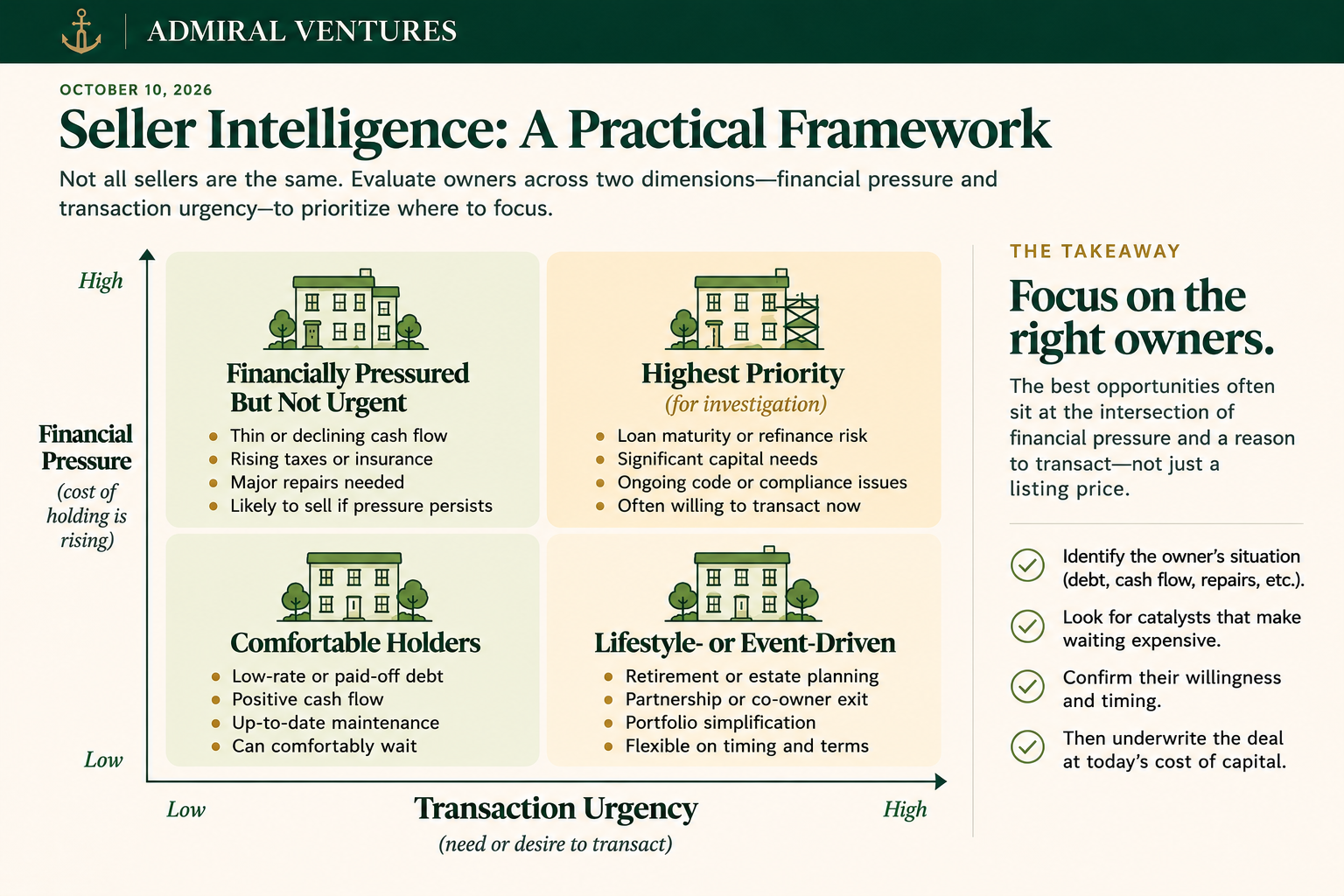
A property sitting on the market isn't necessarily an opportunity. An owner facing a financial deadline might be.
But motivation alone doesn't make a good investment.
The numbers still have to work at today's cost of capital.
The edge isn't finding properties for sale. It's understanding why their owners need to sell.
Seller intelligence may be more valuable than listing intelligence.
Seller intelligence tells you where to look.
Underwriting tells you what to pay.